
Shalaka Agnikarma
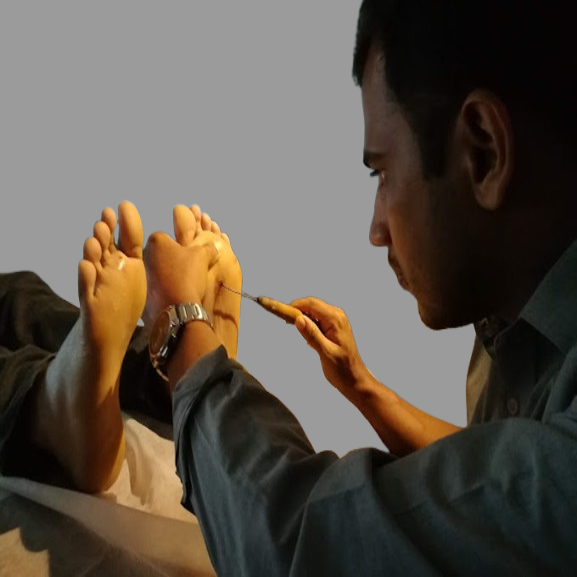
Shalaka Agnikarma: A Specialized Ayurvedic Procedure at Yogakshema Ayurveda Hospital
Importance of Shalaka Agnikarma
- Pain Relief: Effectively alleviates pain and inflammation associated with musculoskeletal disorders.
- Vata Pacification: Helps to balance the aggravated Vata dosha, which is often responsible for pain, stiffness, and degenerative conditions.
- Improved Circulation: Enhances local blood flow, promoting healing and reducing inflammation.
- Wound Healing: Supports faster healing of specific types of wounds.
Indications for Shalaka Agnikarma
- Musculoskeletal Pain: Conditions such as arthritis, spondylitis, and other disorders causing pain and stiffness.
- Neurological Pain: Examples include sciatica and neuralgia.
- Wounds with Raised Granulation: Especially wounds requiring specialized intervention.
- Skin Conditions: Certain skin issues like warts and moles may be addressed under strict medical supervision.
Mode of Action
- Thermal Effect: The gentle application of heat from the heated Shalaka stimulates blood circulation and provides pain relief.
- Vata Pacification: The heat balances the aggravated Vata dosha, alleviating symptoms such as pain and stiffness.
- Improved Circulation: Enhanced blood flow to the treated area supports healing and minimizes inflammation.
Treatment Regimen
Pre-Treatment
- A detailed consultation with an experienced Ayurvedic surgeon is conducted to assess suitability for the procedure and to design a personalized treatment plan.
During Treatment
- The procedure is performed with utmost care under sterile conditions using specialized Shalakas.
- The application of heat is controlled precisely to achieve therapeutic benefits without causing undue discomfort.
Post-Treatment
- Patients are provided with wound care instructions and specific hygiene guidelines to ensure optimal healing.
Fitness for Treatment
Contraindications
- Pregnancy
- Acute infections
- Bleeding disorders
- Skin infections in the treatment area
- Other medical conditions as determined by the physician
At Yogakshema Ayurveda Hospital, we ensure the highest standards of care for Shalaka Agnikarma. Our focus is on patient safety and delivering effective results through time-tested Ayurvedic practices.
Frequently Asked Questions (FAQs)
1. What is Agni Karma?
Agni Karma is a classical Ayurvedic para-surgical treatment in which controlled heat is applied to specific areas of the body using specialized instruments. It is traditionally used for selected painful musculoskeletal and soft-tissue conditions.
Related Internal Links
- https://yogakshemaayurveda.com/agni-karma/
- https://yogakshemaayurveda.com/para-surgical-procedures/
- https://yogakshemaayurveda.com/surgical-procedures/
- https://yogakshemaayurveda.com/contact-us/
2. What are the benefits of Agni Karma?
Depending on the condition, Agni Karma may help:
- Reduce localized pain
- Improve mobility
- Relieve muscle stiffness
- Support management of chronic musculoskeletal disorders
- Reduce recurrence in selected conditions
- Complement conservative treatment
Treatment outcomes vary and depend on the diagnosis and physician assessment.
Related Internal Links
- https://yogakshemaayurveda.com/musculoskeletal/
- https://yogakshemaayurveda.com/packages/
- https://yogakshemaayurveda.com/consults/
3. Which conditions may benefit from Agni Karma?
After proper evaluation, Agni Karma may be considered for selected patients with:
- Heel pain (calcaneal spur)
- Tennis elbow
- Frozen shoulder
- Osteoarthritis
- Sciatica
- Chronic neck pain
- Low back pain
- Plantar fasciitis
- Certain tendon and ligament disorders
Suitability depends on physician evaluation.
Related Internal Links
- https://yogakshemaayurveda.com/calcaneal-spur/
- https://yogakshemaayurveda.com/osteoarthritis/
- https://yogakshemaayurveda.com/lumbar-spondylitis/
- https://yogakshemaayurveda.com/paralysis/
4. Is Agni Karma painful?
Patients may experience brief heat or mild discomfort during the procedure. The treatment is carefully controlled and performed by trained physicians to maximize safety and comfort.
Related Internal Links
5. How long does the procedure take?
Most Agni Karma procedures are completed within 15–30 minutes, depending on the condition being treated and the treatment protocol.
Related Internal Links
6. Is Agni Karma a surgical procedure?
Agni Karma is classified as a para-surgical Ayurvedic procedure rather than a major surgical operation. It uses controlled heat application without conventional surgery.
Related Internal Links
- https://yogakshemaayurveda.com/para-surgical-procedures/
- https://yogakshemaayurveda.com/surgical-procedures/
7. What should I do after Agni Karma?
Patients are generally advised to:
- Follow wound-care instructions
- Keep the treated area clean
- Avoid strenuous activity if recommended
- Attend follow-up visits
- Use prescribed medicines or dressings as directed
Related Internal Links
8. Is Agni Karma safe?
When performed by qualified Ayurvedic physicians using proper technique and sterile precautions, Agni Karma is generally considered safe for appropriately selected patients. A detailed consultation is essential before treatment.
Related Internal Links
9. Can Agni Karma help avoid surgery?
For some carefully selected conditions, Agni Karma may provide symptom relief and may reduce the need for more invasive procedures. However, it is not a replacement for surgery when surgery is medically indicated. A physician should determine the most appropriate treatment.
Related Internal Links
- https://yogakshemaayurveda.com/surgical-procedures/
- https://yogakshemaayurveda.com/para-surgical-procedures/
10. Why choose Yogakshema Ayurveda Hospital for Agni Karma?
Yogakshema Ayurveda Hospital provides physician-supervised Agni Karma using authentic Ayurvedic Shalya Tantra principles, individualized treatment plans, evidence-informed clinical practice, and comprehensive follow-up care for pain management and rehabilitation.