
Netra Anjana
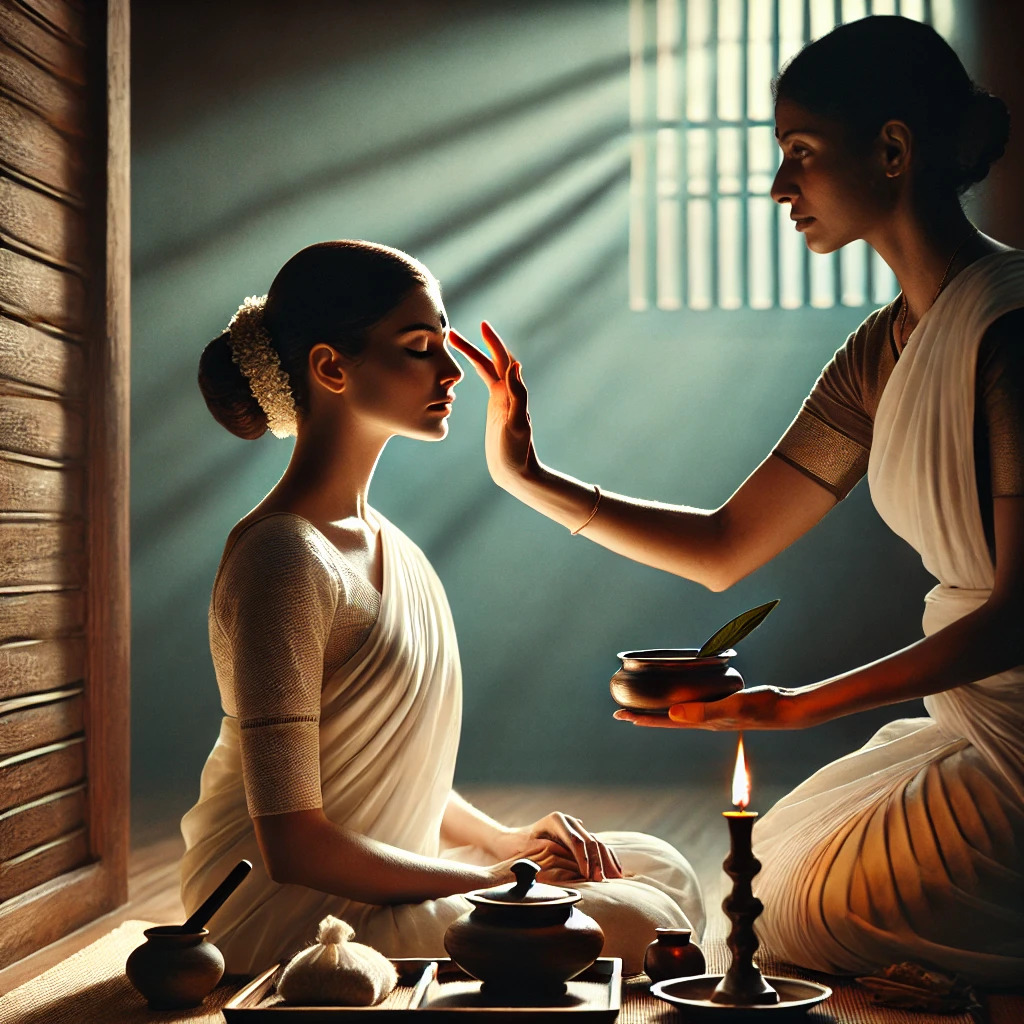
Netra Anjana: Ayurvedic Eye Therapy
Procedure:
- Application Method: The treatment involves applying the medicine to the inner or outer aspect of the eyelid.
- Forms of Medicine: Anjana may be applied as a pill, liquid, or powder.
- Application Tools: Medicines are applied using a Shalaka (a rod-like applicator) or fingers.
Benefits:
- Nourishes and soothes tired, dry, or injured eyes
- Strengthens nerves and muscles of the eyes
- Refreshes the eyes, making them feel rejuvenated
- Enhances blood circulation in facial muscles and nerves
Duration:
- Treatment Time: 20–30 minutes, based on the physician’s recommendation and the condition’s severity
- Treatment Course: Typically 7 to 14 days, depending on individual requirements
Mode of Action:
- Drug Absorption: Medications penetrate through the conjunctiva, enhancing lacrimal secretions and circulation.
- Dosha Elimination: Medicines with a theekshna (sharp) quality help clear out accumulated doshas (imbalances) from the eye and related structures, promoting eye health.
Indications:
Netra Anjana is recommended for conditions such as:
- Refractive errors
- Dry eyes and conjunctivitis
- Computer vision syndrome and eye strain
- Cataracts and glaucoma
- Night blindness and ptosis
- Corneal ulcers and inflammatory lesions
Contraindications:
Netra Anjana is not advisable for:
- Physical exhaustion or emotional stress (anger, fear, etc.)
- Conditions like fever, sunstroke, dehydration, or vomiting
If applied in these states, adverse effects like redness, swelling, pain, discharge, dim vision, or difficulty in eye movement may occur.
Netra Anjana, when applied properly under supervision, offers notable benefits in nourishing, protecting, and healing the eyes, making it ideal for various chronic and acute eye conditions.
Frequently Asked Questions (FAQs)
1. What is Netra Anjana?
Netra Anjana is a classical Ayurvedic eye therapy in which medicated herbal preparations are applied to the eyelid margins using an Anjana Shalaka. It is traditionally performed to support eye health and improve ocular comfort.
Related Internal Links
- https://yogakshemaayurveda.com/netra-anjana/
- https://yogakshemaayurveda.com/panchakarma/
- https://yogakshemaayurveda.com/contact-us/
- https://yogakshemaayurveda.com/about-doctor/
2. What are the benefits of Netra Anjana?
Potential benefits may include:
- Relief from eye strain
- Better eye lubrication
- Reduced dryness
- Refreshed eyes
- Support for healthy tear secretion
- Improved comfort during prolonged screen use
- Nourishment of ocular tissues
- Enhanced eye wellness
Results vary depending on the individual’s condition.
Related Internal Links
- https://yogakshemaayurveda.com/mental-health/
- https://yogakshemaayurveda.com/lifestyle-wellness/
- https://yogakshemaayurveda.com/packages/
3. Which eye conditions may benefit from Netra Anjana?
Depending on clinical evaluation, Ayurvedic physicians may recommend Netra Anjana for selected patients with:
- Dry eyes
- Computer vision syndrome
- Eye fatigue
- Conjunctivitis
- Watery eyes
- Refractive errors
- Early supportive care for certain chronic eye disorders
It should not replace ophthalmic treatment when required.
Related Internal Links
4. How is Netra Anjana performed?
The physician applies a prescribed Ayurvedic preparation to the eyelid margin using a sterile Anjana Shalaka or other appropriate technique. The procedure is customized according to the patient’s eye condition and treatment goals.
Related Internal Links
5. Is Netra Anjana safe?
Yes. Netra Anjana is generally considered safe when performed by qualified Ayurvedic physicians after a comprehensive eye evaluation. Self-treatment is not recommended.
Related Internal Links
6. How long does a Netra Anjana session take?
A typical session generally lasts 20–30 minutes, although the exact duration depends on the individual’s condition and treatment protocol.
Related Internal Links
7. Can Netra Anjana help with digital eye strain?
Many patients experiencing prolonged screen exposure and computer vision syndrome may benefit from physician-directed Netra Anjana as part of a comprehensive Ayurvedic eye care plan.
Related Internal Links
8. Who should avoid Netra Anjana?
The therapy may not be appropriate during acute fever, severe dehydration, vomiting, significant eye infections, or certain medical conditions. An Ayurvedic physician will determine suitability before treatment.
Related Internal Links
9. Can Netra Anjana be combined with other Ayurvedic eye therapies?
Yes. Depending on the diagnosis, it may be combined with Netra Tarpana, Aschyotana, Seka, or other Netra Kriyakalpa procedures as part of an individualized treatment plan.
Related Internal Links
10. Why choose Yogakshema Ayurveda Hospital for Netra Anjana?
Yogakshema Ayurveda Hospital provides physician-supervised Ayurvedic eye care using authentic Kriyakalpa procedures, personalized treatment protocols, and holistic lifestyle guidance to support long-term eye health.